
No One-Click Kent County Record Search
Kent County does not publish one local criminal-history portal. It also has no online jail roster, booking log, active-warrant list, or verified Jayton police database. That gap does not mean the records do not exist. It means each custodian must be checked for the part it creates. The combined County and District Clerk holds local court files. The Kent County Sheriff keeps sheriff incident, arrest, booking, jail, and warrant material. Texas DPS holds reported statewide criminal-history data.
The best route starts with the event in question. A filed charge belongs at the clerk counter. A recent arrest or current jail stay starts with the sheriff. A public statewide conviction or deferred-adjudication search runs through DPS. For visual context, the official Kent County homepage identifies the courthouse and county offices that anchor local access.
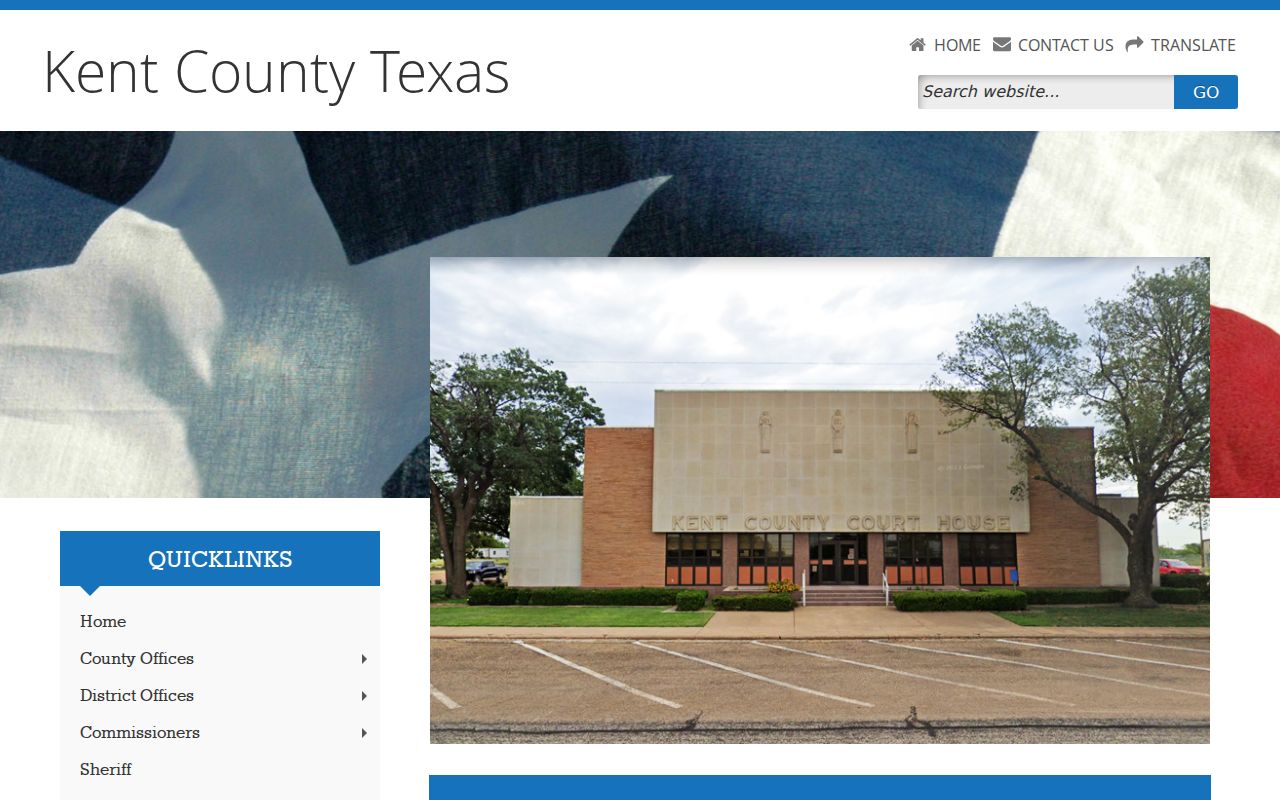
The county screen reinforces a key point: Kent County criminal records are reached through real offices and state systems, not through a hidden all-in-one local database.
Checking Criminal History in Kent County
Begin with a full legal name, known spelling variants, an approximate year, and the type of event. A date of birth can help distinguish a name match, but only fingerprints establish positive identity in the DPS system. A cause number, report number, booking number, charge, or arresting agency makes a Kent County request much more precise.
- Call the combined clerk at 806-237-3881 for a filed felony or misdemeanor case. Ask which court holds it.
- Call the Kent County Sheriff and jail at 806-237-3801 for a sheriff report, recent booking, custody status, or warrant question.
- Use the Texas DPS public name search for public reported Texas convictions and deferred adjudications.
- Compare the local case judgment with the DPS result. Arrest charges can change before filing, and reports can reach DPS late.
- Request a certified court copy or a fingerprint personal review when identity or final disposition must be confirmed.
The access path is: arresting agency → Kent County jail when booked → prosecutor and court → clerk disposition → DPS criminal-history repository. A result from one point cannot stand in for every other point.
One Clerk, Two Kent County Courts
Kent County has an unusually compact records counter. Craig Harrison serves as both County Clerk and 39th District Clerk. His office at the Kent County Courthouse, 101 N. Main Street, Jayton, TX 79528, keeps the local files for both county and district criminal cases. Mail goes to P.O. Box 9, Jayton, TX 79528. The clerk can be reached at 806-237-3881 or by fax at 806-237-2300.
The roles remain distinct even though one official performs both. The 39th District Court handles felonies across four counties. Class A and B misdemeanors fall within the county court. Fine-only matters may go to the Justice of the Peace or the court printed on a citation. No Jayton municipal portal was found.
Combined County/District Clerk
101 N. Main Street
Jayton, TX 79528
806-237-3881
Kent County Sheriff and Jail
227 S. Main Street
Jayton, TX 79528
806-237-3801
Texas Official Background Checks
Texas DPS offers two routes. The public name search releases permitted conviction and deferred-adjudication data, but biographic data does not prove identity. A person reviewing their own Texas record can submit fingerprints through Fingerprint Applicant Services of Texas, operated by IDEMIA/IdentoGO. The DPS fingerprinting-services page explains that FAST route.
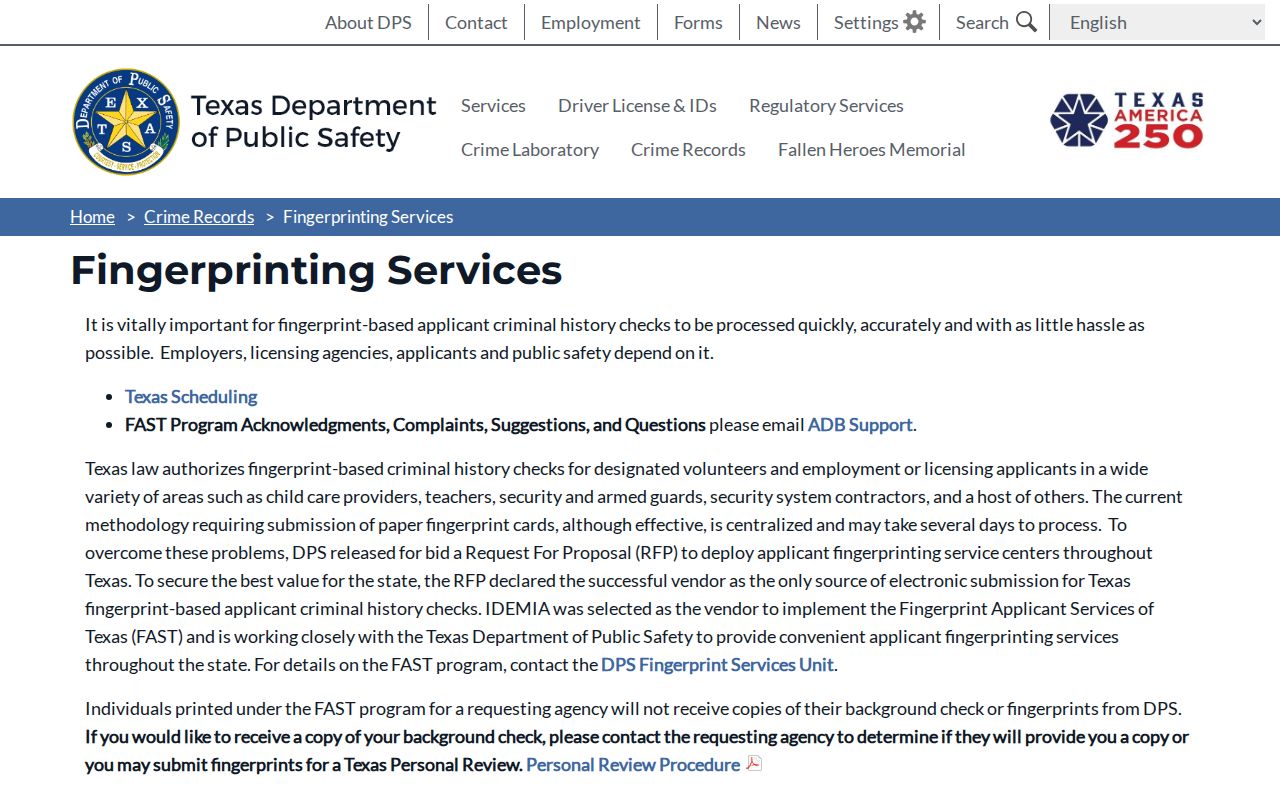
This official route is the sound choice when a Kent County name result may belong to someone else or a person needs to challenge their own Texas record.
DPS lists a $15 fingerprint record check and a $10 FAST service charge in its FAQ, while vendor and program fees can change. The FBI Identity History Summary costs $18 and requires fingerprints. No current IdentoGO enrollment center was verified inside Kent County. The IdentoGO location and appointment tool should be used instead of relying on an old neighboring-site address.
The live locator keeps Kent County residents from traveling to a site whose location or hours have changed.
| Official product | Price found | Scope |
|---|---|---|
| DPS public portal credit | $1 plus card charge | Public reported Texas conviction and deferred data |
| DPS offline name check | $10 | DPS public data |
| DPS fingerprint record check | $15 | Fingerprint-based Texas personal review |
| FAST service | $10 in DPS FAQ | Electronic capture and transmission; confirm live amount |
| FBI Identity History Summary | $18 | The subject's national fingerprint summary |
The $1 Kent County DPS Search
The Texas DPS public portal requires an account and prepaid search credits. Each search credit costs $1. Credit-card orders add 2.25 percent per credit and a $0.25 transaction fee. The product covers public Texas convictions and deferred adjudications reported to DPS. It does not supply the full Kent County court file, every arrest, or an active-warrant check. The DPS Criminal History Name Search shows the account-based entry point.
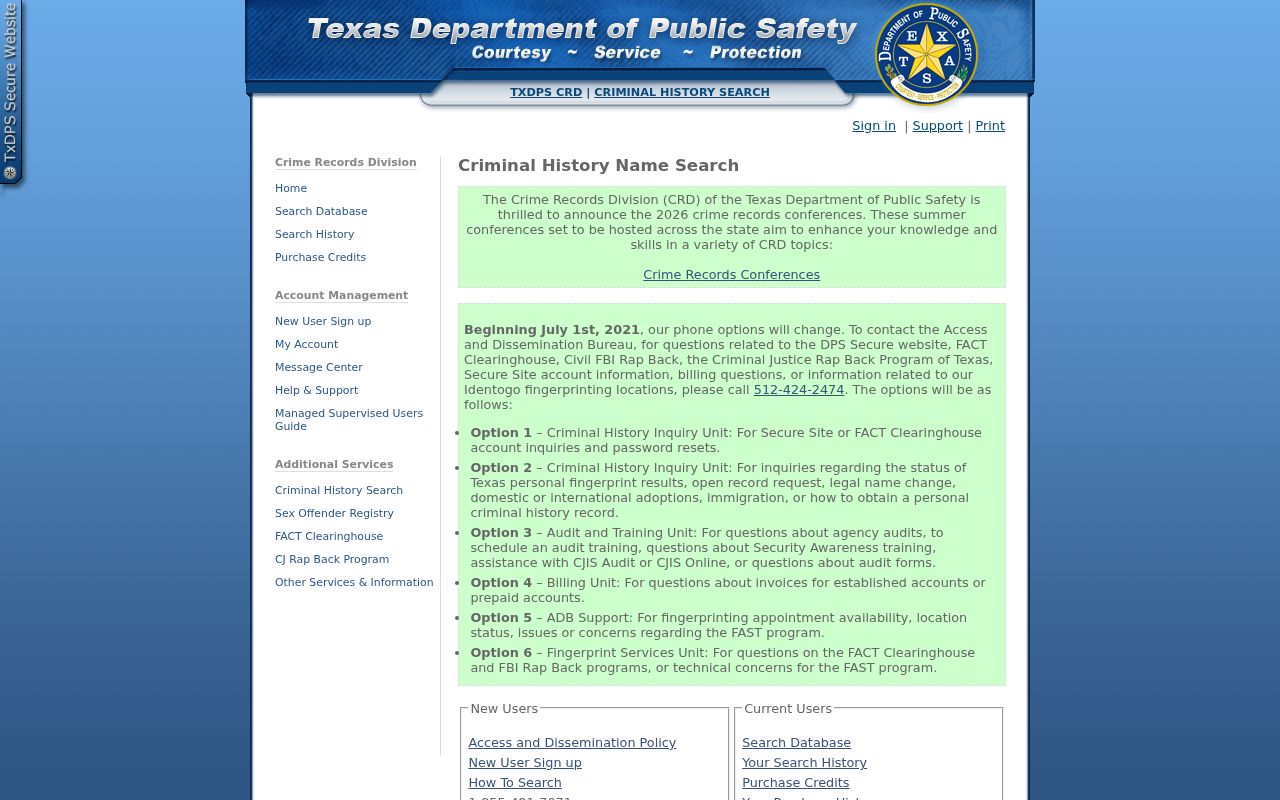
Its narrow public scope is why a Kent County judgment should be checked when the exact case result matters. The official DPS search help states that fingerprints are the only way to link a person positively to a record.

That warning is crucial in a name search, since close spellings and shared birth details can return the wrong candidate.
| Search field | Required | Use |
|---|---|---|
| Last name | Yes | Legal surname; name matching can return candidates |
| First name | Yes | Use the full legal first name when known |
| Middle name | No | Helps separate common names |
| Date of birth | No, but important | Strong biographic filter |
| Sex and race | No | Additional narrowing fields |
Criminal Record Types
Kent County criminal history is made from separate records created at different stages. The arresting agency writes an incident or arrest report. The jail makes a booking file after admission. A prosecutor selects the charge, if any, that enters court. The clerk records the filed papers, hearings, plea, judgment, sentence, and later docket events. DPS then builds a fingerprint-linked arrest cycle from agency submissions.
- Arrest and booking records: allegations, intake facts, bond, holds, and release or transfer data.
- Court case files: the charge actually filed, docket events, orders, outcome, and sentence.
- Warrant records: court authority for an arrest, or a capias tied to a missed setting or judgment.
- Custody and supervision records: county jail, TDCJ prison, community supervision, and parole occupy distinct systems.
- Registry records: Texas DPS public profiles arise from Chapter 62 registration duties and are not general rap sheets.
Police reports, warrants, jail data, felony and misdemeanor classes, probation, parole, and expunction all stay tied to the office and law that created them. A label alone cannot show final guilt or current custody.
No Kent County Jail Roster
The Kent County Sheriff does not publish an online inmate roster or booking blotter. For current local custody, call 806-237-3801 and provide the person's full name and date of birth. Ask for the booking date or number, arresting agency, current charges, bond or hold, court, and whether the person was released or transferred. A phone response can help locate someone, but it is not a certified record.
When more detail is needed, send the sheriff a focused request under the Texas Public Information Act. Ask for an existing booking record, arrest report, or releasable incident material. Include a date range, place, name, report or booking number if known, desired format, and whether inspection or copies are sought. Kent County publishes no local sheriff fee schedule or set turnaround time.
After a state-prison transfer, use the TDCJ inmate-information channels. TDCJ is not a tool for a fresh Kent County booking. Federal custody is separate again and belongs in the Bureau of Prisons locator.
Inside a Kent County Criminal Record
A record must be read in context. An arrest file states what an officer alleged and what the jail received. The Kent County court file shows what the prosecutor filed and what the court decided. DPS shows the arrest cycle and disposition data reported into the state system. Those views may use different charge text or dates without describing different people or events.
| Name and identifiers | Legal name, aliases, birth data, descriptors, and state or federal identity numbers where lawfully shown |
|---|---|
| Arrest and booking | Date, agency, alleged offense, intake number, bond, hold, release, or transfer |
| Charges and statutes | Arrest allegation, filed count, offense level, and cited Texas law |
| Disposition | Conviction, dismissal, acquittal, deferred adjudication, no-bill, or another outcome |
| Sentence | Jail or prison term, fine, restitution, or community-supervision order |
| Custody or supervision | County custody, TDCJ placement, probation status in the court order, or public parole data |
Private identifiers, victim and minor data, juvenile material, sealed records, and expunged information can be withheld or removed. A public record is not the same as an unrestricted file.
Fixing a Kent County DPS Disposition
A missing DPS outcome does not prove that Kent County left a case open. Local agencies report at different points, and a final disposition may be delayed or absent from the state cycle. Start with the combined clerk. Request the certified judgment, dismissal, acquittal, or other source paper for the exact cause number. Then obtain a fingerprint-supported DPS personal review so the disputed event is tied to the right person.
Compare the arrest date, charge, tracking data, court, cause, and disposition. The arresting agency controls errors in its arrest event. The clerk or court controls the judgment and other court source documents. DPS updates its repository from corrected submissions. Follow the DPS process for resolving criminal-history errors with the certified papers.
Note: A blank name-search result is not proof that no Kent County arrest, filing, or restricted record exists.
Public Access Laws in Texas
The Texas Public Information Act generally permits access to existing public government records, but it also recognizes exceptions for active investigations and other protected material. Court records follow judicial access rules, while DPS criminal-history dissemination is governed by a different statute. Kent County requesters should ask the sheriff for sheriff-created records and the clerk for court files instead of treating one law as a key to every database.
Key Texas laws:
Government Code Chapter 552 generally opens existing public information while allowing specified law-enforcement material to be withheld.
Government Code Sections 411.083 and 411.135 protect criminal-history information except where law permits public conviction and deferred-adjudication release.
Texas Rule of Civil Procedure 76a and judicial access rules support access to court records subject to sealing and confidentiality.
Code of Criminal Procedure Chapter 55A governs expunction of qualifying arrest records.
Code of Criminal Procedure Article 2B.0112 sets identifying elements for a body-camera request.
Redaction may cover juvenile data, sensitive victim or witness details, private identifiers, sealed or nondisclosed cases, and active investigative material. Ask for records, not answers to questions, and give enough facts to locate them.
Kent County Warrants Without a List
Kent County offers no official public active-warrant list, most-wanted page, warrant app, or special warrant line. Call the sheriff at 806-237-3801 and ask whether the office will confirm the warrant and name the issuing court. Then call the combined clerk at 806-237-3881 for district or county matters, or use the courthouse main line at 806-237-3373 for Justice of the Peace routing.
An arrest warrant rests on alleged probable cause. A bench warrant or capias may follow a failure to appear or a supervision issue. A capias pro fine concerns enforcement after a fine-only judgment and has its own process. TCIC and NCIC law-enforcement systems are not public search tools, and the DPS name-search portal is not an active-warrant database.
To address your own warrant, identify the court and cause, ask what remains outstanding, and learn whether counsel, bond, a new setting, payment arrangements, or surrender is required. Obtain written clearance and allow time for agency systems to update.
Sealed, Expunged, and Restricted Records
Texas uses two different forms of relief. Chapter 55A expunction directs covered records to be destroyed or returned and bars their use. An order of nondisclosure limits public criminal-history dissemination but leaves access for criminal-justice agencies and other entities named by law. Neither remedy follows from a dismissal by itself, and one rule does not fit every arrest episode.
For a Kent County arrest, begin with the District Clerk at the courthouse. Ask about current filing requirements, the civil cause number, service list, hearing method, and total fee. No Kent-specific petition form or complete local filing and service total was published. Eligibility can depend on the result, charge status, related charges, limitations periods, and prior history.
- Expunction
- Destruction or return of covered records when Chapter 55A conditions are met.
- Nondisclosure
- A limit on public release that does not erase all official access.
- Dismissal
- An end to a charge without conviction; it does not automatically remove the arrest record.
- Deferred adjudication
- Supervision without an initial finding of guilt that can still remain public unless relief applies.
After an order, keep certified copies, check that each named holder received it, and later obtain a DPS personal review. The current Texas chapter matters because expunction law was reorganized in 2025.
Kent County Records Moved Under Escort
Kent County's record history is tied to its county-seat dispute. A 1952 vote authorized moving the seat from Clairemont to Jayton. Litigation ended on July 30, 1954, when the 11th Court of Civil Appeals ruled for Jayton. On the day of that ruling, records left the Clairemont courthouse under police escort and were placed in a bank vault in Jayton.
The Clairemont courthouse burned in April 1955. Commissioners leased Jayton's First National Bank Building for courthouse use that June. The official National Register account also says commissioners alternated meetings between the communities for a time. That chain shows why record custody is not an abstract detail here. The location of Kent County public records changed amid litigation, a physical move, and the loss of the prior courthouse.
Modern searches begin at the courthouse, but older paper or archived files still call for the clerk. Ask about format, access, and copy charges before traveling.
Kent County Criminal Records by City
Jayton is Kent County's only incorporated city and the hub for each verified local record channel. Girard, Clairemont, and Polar are communities, not cities with presumed police departments or courts. Jayton has no verified city police records office, municipal-court portal, or city holding facility. Local reports, bookings, and court files therefore route through the Kent County sheriff, jail, Justice of the Peace, county court, and 39th District Court as the event requires.
Jayton Criminal Records
2020 population 511 · County sheriff, jail, clerk, and courthouse channels
The city page follows Jayton criminal records from the local counter through county and state systems without inventing a city police agency or municipal case search.
Kent County Highway Record Trails
US 380 crosses Kent County from east to west, while State Highways 70 and 208 run north to south. A stop, crash, or arrest on those routes can create records in more than one place. A Texas DPS trooper keeps the agency incident or arrest report. TxDOT supplies the official crash-record channel. The Kent County jail creates a booking file only if the person enters local custody, and the court clerk receives a file only after a charge is filed.
The FBI Crime Data Explorer is the official route for reported crime statistics and agency coverage.
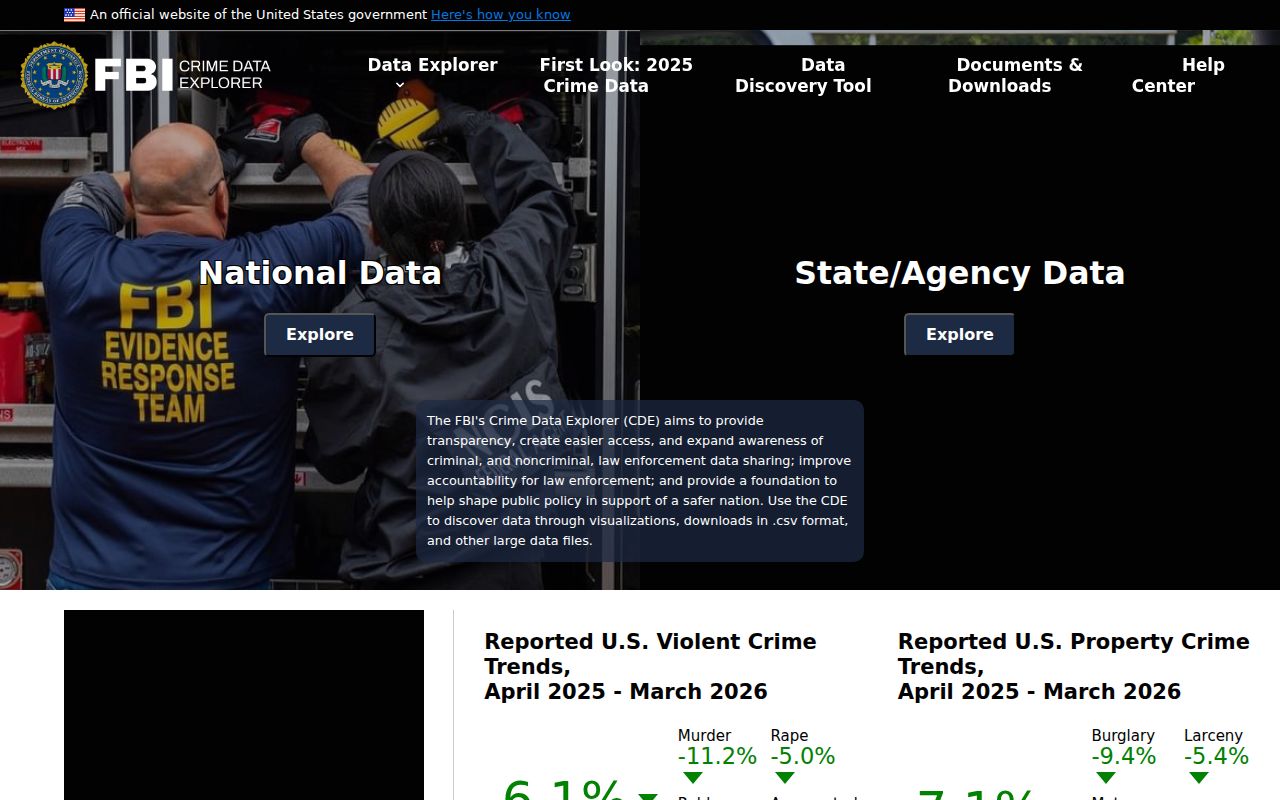
The interface must be read with care in Kent County because its population is under 1,000 and one or two events can swing a rate sharply.
Census estimates placed the county at 703 residents in 2024 and 674 in 2025 across 902.51 square miles. Small counts and reporting coverage matter more than a bare percentage. When no current official count is exposed, do not turn an absent figure into a claim that no crime occurred.
Who Owns Each Kent County Record
The Kent County Sheriff owns its incident, arrest, jail, booking, 911 or CAD, and sheriff warrant material. A DPS event stays with DPS even when it happened inside the county. The combined clerk owns filed district and county court documents. The 39th District Community Supervision and Corrections Department handles working probation files, while the judgment remains the best public source for the supervision order.
TDCJ handles sentenced state-prison custody and public release or parole fields. The Texas Board of Pardons and Paroles and TDCJ Parole Division handle parole decisions and supervision channels. DPS manages both the central criminal-history repository and the Texas Public Sex Offender Registry. The registry can be searched for personal and community safety, but it is not a substitute for a general criminal-history check and must not be used to harass or threaten anyone.
That ownership map gives Kent County searchers a test for each result: who created it, what stage does it describe, and which office can correct it? When the answer is unclear, return to the originating report, certified judgment, or fingerprint review before relying on a name match.