
Kent County Criminal Court Cases
Kent County criminal court cases split by the level of the charge. The Texas trial-court directory lists the 39th District Court as the felony trial court serving Kent, Haskell, Stonewall, and Throckmorton counties. The official court overview explains the distinct roles of district, constitutional county, justice, and municipal courts. Kent County Court has original jurisdiction over ordinary Class A and Class B misdemeanors. Fine-only criminal matters may be heard by the Kent Justice of the Peace. No official Jayton municipal court or municipal case portal was found, so a person holding a citation should use the court name and phone printed on it.
The local file remains in Jayton even though the district judge has an administrative office in Haskell. The combined County and District Clerk keeps both district and county court records at the Kent County Courthouse. That compact setup reduces the number of counters a searcher must call, but it does not merge the courts or their powers.
The official Kent County clerk page shows the criminal case contact at work. Its layout can be viewed through the Kent District Clerk source.
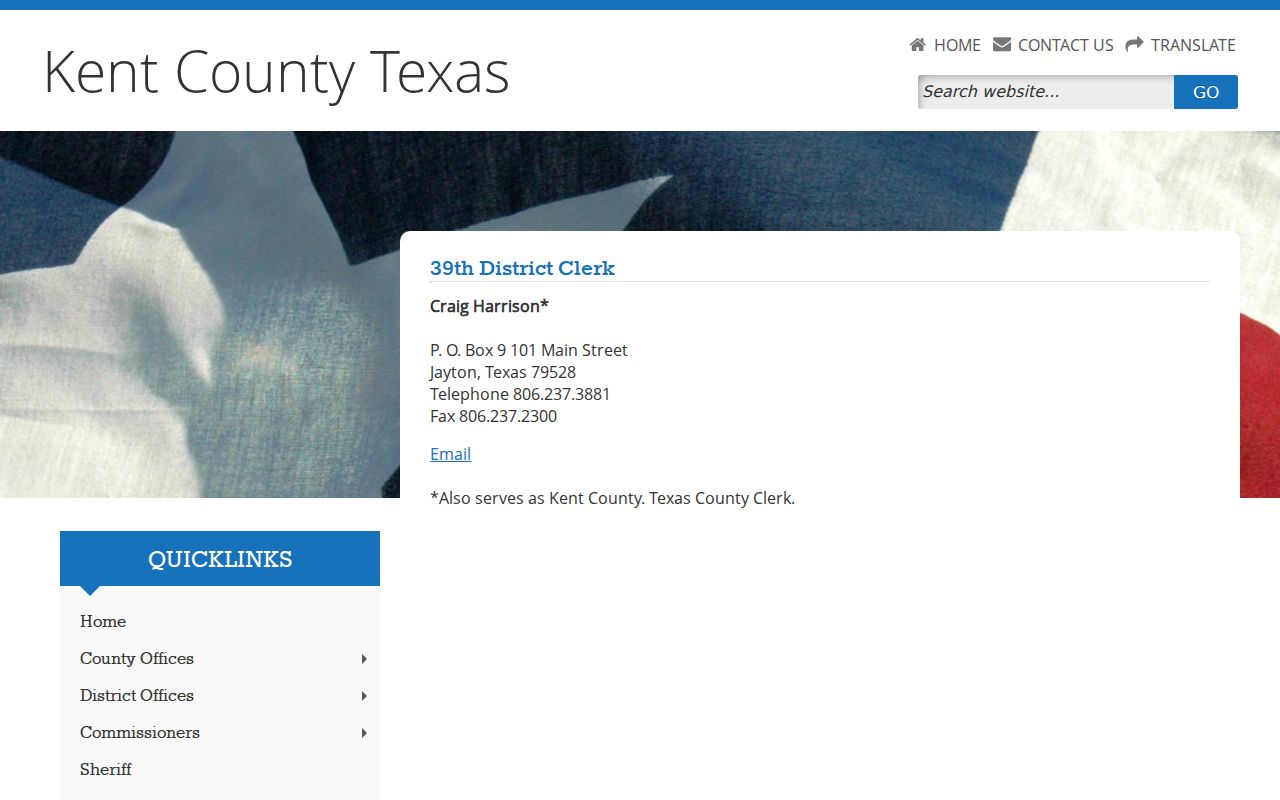
This screen confirms the combined office that routes felony and misdemeanor file requests.
Kent County Case Clerk Call
Call the clerk at 806-237-3881 when the cause number is known, the online result is blank, or a certified court paper is needed. The office is at 101 Main Street, P.O. Box 9, Jayton, TX 79528; fax 806-237-2300. Give the full name, an approximate filing or arrest year, the charge if known, and whether the matter seems to be a felony or misdemeanor. Ask whether the file is electronic, paper, archived, sealed, or subject to redaction.
For a Kent County file, request the exact item that answers the question. A docket sheet lists events but may not state every term of the judgment. A signed judgment gives the disposition. A sentence or community-supervision order records punishment and conditions. The charging instrument shows what the state filed, which may differ from the charge recorded at booking. Kent County does not publish its copy and certification prices, so confirm the fee and ask whether a plain or certified copy can be sent by email or mail.
The county also publishes a separate County Clerk page for the same elected official.
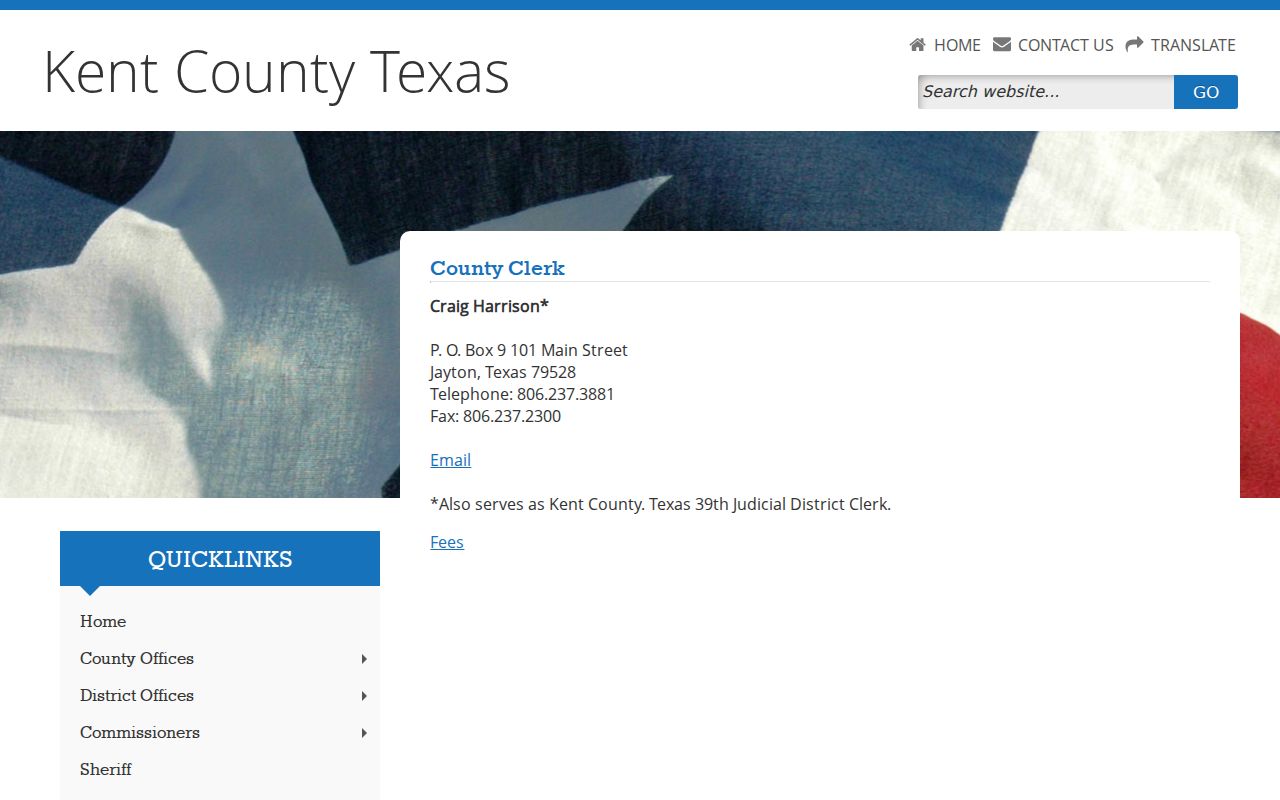
The paired Kent County pages show why one phone call can route both county and district criminal case requests.
Searching Kent County Case Records
A complete Kent County criminal case search uses the clerk first and the statewide interface as a supplemental check. Start with the court named on the paperwork. If no cause number is available, a name and approximate year help the clerk narrow the index. Then compare the docket and filed charge with the judgment rather than relying on a short result line.
- Identify the likely court from the charge and paperwork: district for felonies, county for Class A or B misdemeanors, and justice court for fine-only matters.
- Call 806-237-3881 and ask for a name or cause-number search, using the approximate year and charge to narrow it.
- Check re:SearchTX after registration, but treat an empty search as inconclusive.
- Ask for the docket sheet, complaint, information or indictment, bond orders, judgment, sentence, and any public filings that answer the request.
- Confirm archive status, redactions, delivery method, and the current price for plain or certified copies before ordering.
The official re:SearchTX reference guide documents several controls rather than a simple county name form.
| Field Label | Type | Required | Notes |
|---|---|---|---|
| Search keyword | Text | No | Press Enter or use the search icon. |
| Cases / Filings / Text / Hearings | Tabs | Choose one | Each opens a distinct search view. |
| Left filters | Faceted controls | No | Refine cases, documents, filings, or hearings. |
| Case description | Result link | No | Opens the Case Details view. |
| Hearing type | Result link | No | Opens a hearing detail dialog. |
| Export / Save search | Buttons | No | Available after sign-in. |
re:SearchTX Misses Kent County Cases
The Texas Judicial Council's 2024 data report said re:SearchTX held about 150 million documents but excluded criminal case records at that time. The report also described a court-system integration push. That makes the portal useful for learning its interface and checking current coverage, but it does not turn a missing result into proof that no Kent County case exists.
The safest response to a blank result is direct confirmation with the Kent County clerk. Ask whether the file is on paper, stored in an archive, filed under a different spelling, protected from remote display, or not yet indexed. Kent County confirmation is also important when the case is recent. Prosecutor review and filing occur after the arrest, so there can be a gap between a booking and the creation of a court cause.
The official re:SearchTX landing page shows the statewide entry point.
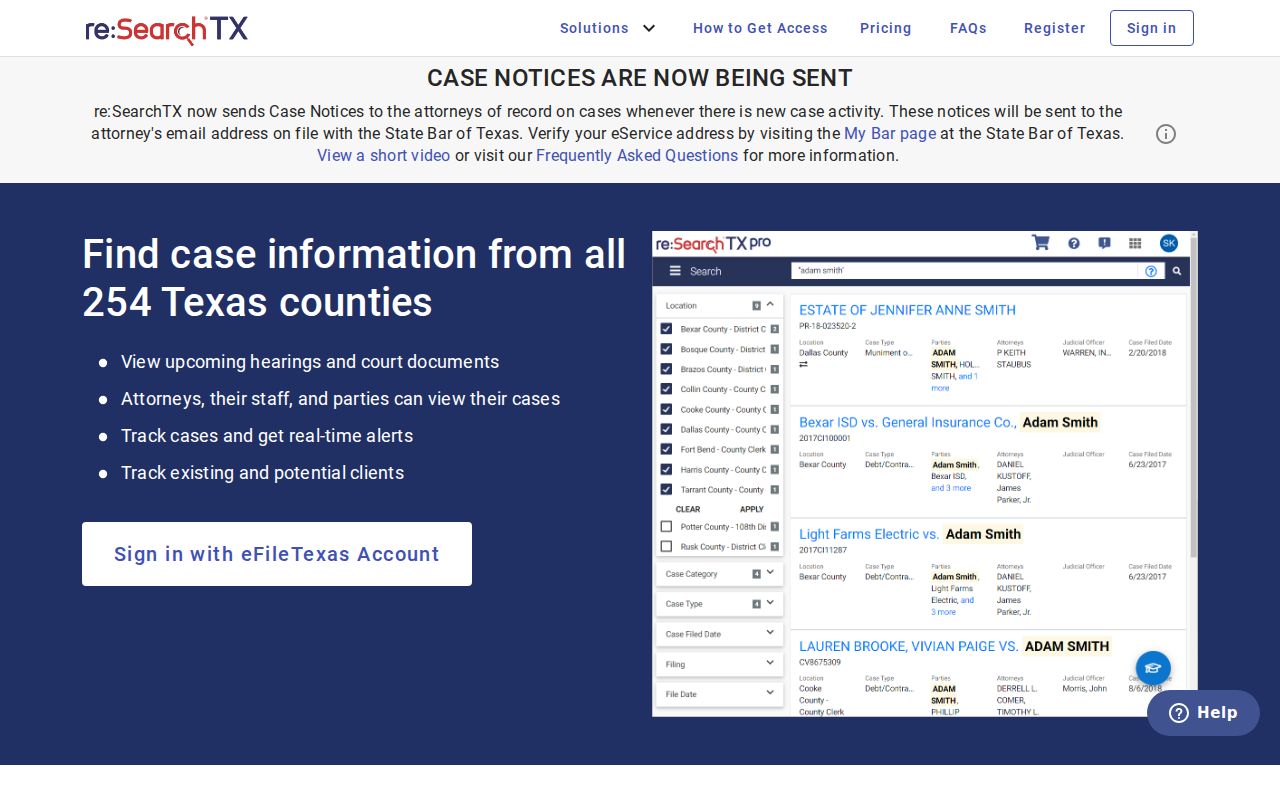
The page is a secondary access route, while the Kent clerk remains the source for a local criminal file.
Inside a Kent County Case File
A Kent County criminal court file records what prosecutors filed and what the judge or jury decided. It is distinct from the sheriff's arrest report and jail booking file. The header ties a cause number to a court, filing date, case type, style, and current status. Party and counsel entries identify the State of Texas, the defendant display, and the attorneys. Charge rows may include the offense text, code, degree or class, count, and charging instrument.
| Cause Number and Court | Identifies the local case and whether it sits in district, county, or justice court. |
|---|---|
| Charging Document | Shows the complaint, information, or indictment and the charge actually filed. |
| Docket Events | Tracks filings, settings, pleas, motions, trial activity, judgment, and later revocation action. |
| Hearing Details | May list date, time, type, location, and judge. |
| Disposition and Judgment | Records conviction, dismissal, acquittal, deferred adjudication, or another reported result. |
| Sentence and Conditions | May state custody, fines, costs, community supervision, and related court terms. |
Kent County document access can vary. A docket entry may be public even when the underlying image is unavailable online or must be ordered from the clerk. Sensitive identifiers, victim and minor data, sealed material, and nondisclosed information may be removed from the public view.
Kent County Felony Court Cases
The 39th District Court handles Kent County felony cases. Texas Penal Code Chapter 12 divides them into capital, first-degree, second-degree, third-degree, and state-jail felonies, subject to offense rules and enhancements. A state-jail felony is still a felony despite the word "jail." The filed indictment and judgment, not a booking abbreviation, establish the charge and outcome that matter in the court record.
The judge's office is at the County Courthouse, 1 Avenue D, P.O. Box 966, Haskell, TX 79521, with phone 940-864-2661. That address is useful for Kent County scheduling questions, but case files stay with the combined clerk in Jayton. The distinction prevents an unnecessary records trip to Haskell.
The official 39th District Judge page documents the multi-county court.
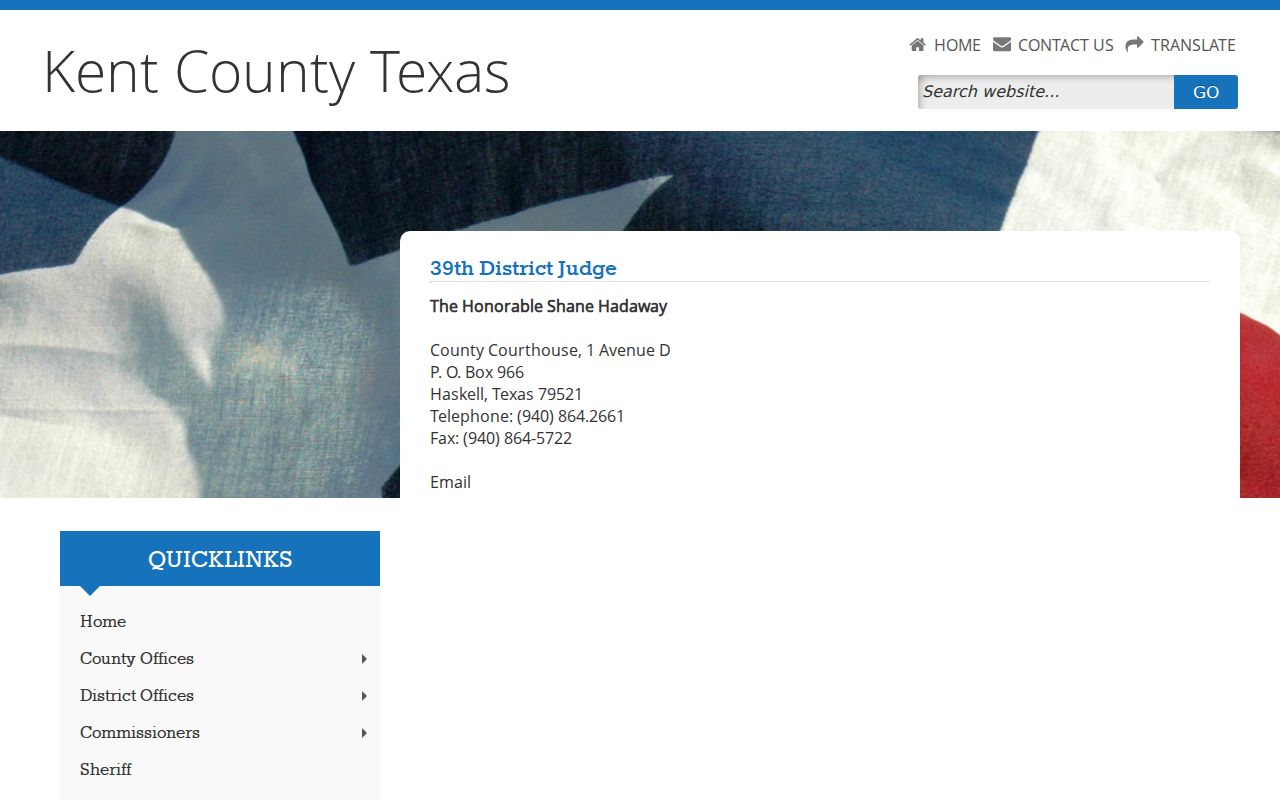
The source helps separate the judge's administrative contact from the Jayton records counter.
How a Criminal Case Moves
A Kent County criminal case may begin after arrest and magistration, but the filed case reflects the prosecutor's review. A complaint can support the accusation. An information commonly charges a misdemeanor, while an indictment is the grand jury's written accusation for felony prosecution. At arraignment, the formal charge is addressed and a plea is taken. Discovery, motions, settings, negotiations, or trial follow.
Case flow: Charges Filed → Arraignment → Pretrial → Plea or Trial → Disposition → Sentencing
The court judgment controls the final outcome. A conviction leads to sentencing, while a charge may instead be dismissed, end in acquittal, or result in deferred adjudication. Later docket events may include an appeal or a motion to revoke community supervision or adjudicate guilt. These entries can change the meaning of an older docket, so read the full event line and the latest signed order.
The 39th District Attorney page identifies the office that prosecutes district-level matters.
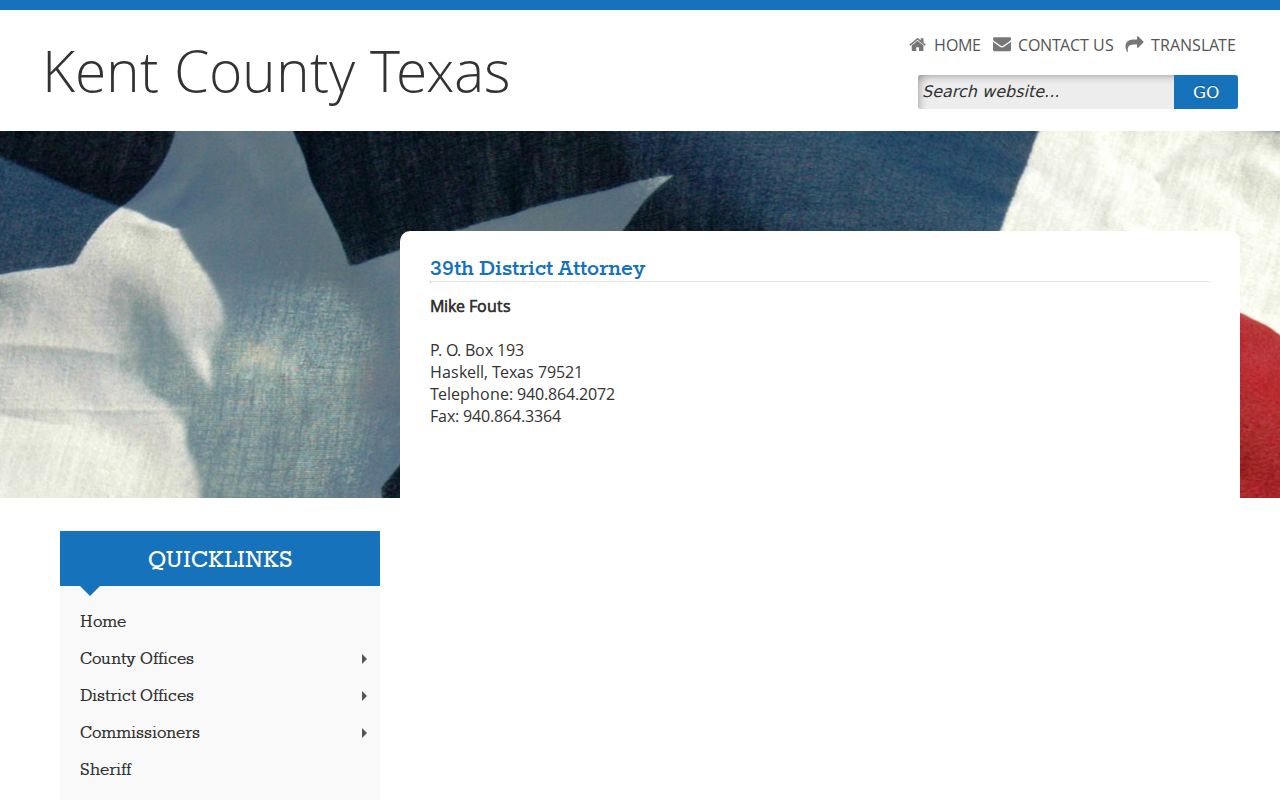
The prosecutor source marks a separate role from the clerk, who maintains the filed case record.
Reading Kent County Docket Results
Short Kent County docket terms can determine whether a criminal case ended in guilt, no finding of guilt, or no prosecution. "Disposition" means the result of a charge. "Dismissal" ends that charge without conviction, but it does not erase the booking. "Acquittal" is a not-guilty finding. "Deferred adjudication" places a person on community supervision without an initial adjudication of guilt, though the record can remain public unless legal relief applies.
- Arraignment
- The proceeding where the formal charge is read and a plea is taken.
- Nolle prosequi
- The prosecutor's formal decision not to proceed with a charge.
- Judgment
- The signed court record stating the result and, when applicable, the sentence.
- Capias
- A court writ directing an arrest; it is not the same as a final disposition.
- Community supervision
- The Texas statutory term often called probation.
When a docket code is unclear, ask the clerk for the filed document behind it. Do not infer the result from a charge label alone.
Case Record Access & Restrictions
Texas court records are generally open under the judicial access framework, but access is not absolute. The Kent County clerk may redact sensitive identifiers and information about victims or minors. Juvenile records, sealed files, expunged matters, and information covered by a nondisclosure order can be restricted. A public docket may also omit a document image that remains available only by request or for a copy charge.
If a Kent County case does not appear, give the clerk the identifying details and ask about the record's status. A restricted result should not be treated as permission to seek sealed content through another channel. For public material, request inspection or a plain copy unless certification is needed for an official purpose.
Fixing Kent County Case Dispositions
A DPS criminal-history cycle can be incomplete when a local disposition was delayed, omitted, or linked incorrectly. First obtain a certified Kent County judgment from the clerk. Then compare it with a fingerprint-supported DPS personal review, since fingerprints link identity more reliably than a name search. The arresting agency controls the source arrest event, the clerk and court control the judgment, and DPS updates the repository from corrected submissions.
Use the Texas DPS "Resolving Criminal History Errors" process with the certified Kent County source paper. A name-only public result is not enough to prove identity or to override a signed judgment. The broader Kent County criminal history overview explains how clerk, sheriff, and DPS files fit together.
Federal cases follow a separate route. The official PACER system supplies federal dockets after registration.
The federal judiciary's PACER explanation covers access and current fee rules. PACER does not replace the Kent clerk for a state case filed in county or district court.